Communists on Campus “Whether We Like it or Not, There’s Going to be a Revolution in Britain”

George Spraget

Is the spectre of communism haunting the University of Birmingham? Marxist Society members would answer yes. In a country where Kier Starmer’s ratings are at a historic low for a British PM and far-right marches boast huge attendances, Marxsoc firmly believes that the true threat to government (and indeed the establishment) looms from the revolutionary left.

Nearly half of all 13–27-year-olds think society should be radically changed through revolution, according to a Channel 4 investigation back in January 2025. Ask most students, though, and communism is an almost laughable prospect: an ideology to be studied in classroom history lessons, not taken seriously in real life. Out of the university’s 38,000 students, approximately 37,970 of them are not members of Marxsoc. Still, the few who are have interesting stories to tell and controversial opinions to voice. Why are some students turning to communism in 2025?

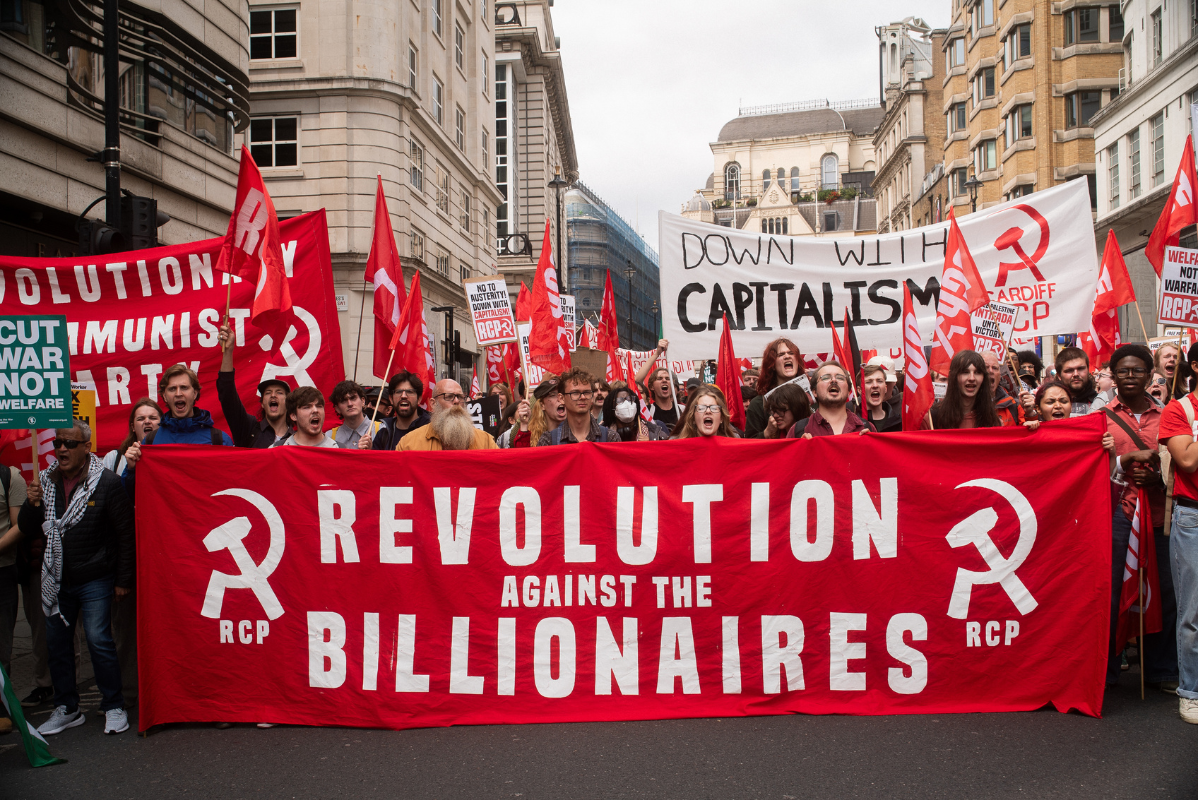
Marchers with red flags and a large banner saying
RCP members march in London, 7 June 2025 (The Communist)

If you’ve ever walked past a group of earnest young people selling newspapers, awkwardly ignoring their invitations to learn more about Middle Eastern politics and “how to fight state repression,” then you’ve already encountered Marxsoc. Campaigning like this—essentially, reaching out for potential new recruits—constitutes a huge proportion of the society’s activity. On campus, around the city, and on social media, members are relentless in their efforts to spread the word, as well as bring in money through sales of the party newspaper, The Communist.

Birmingham’s campus society is part of an international umbrella, the Revolutionary Communist Party (RCP), which holds three landmark events a year. Revolution Festival offers “training in Marxist theory, revolutionary history, and class-struggle methods.” There’s an annual National Congress, much like any other political party, with leadership elections and discussions of administrative matters. Then there’s a social camping trip to the Peak District, too.

What brings members together is an utter disillusionment with everything capitalism represents, and a feeling that their interests are completely unrepresented in mainstream politics. “Capitalist work is awful. You work the hours you are told, you’re paid the wage you’re told, and you have no control over anything,” society comrade Henry confidently told me. Then, he says, there are increasing prices, the “impossible” housing market, and the government’s “horrific attacks on working people, like cutting the winter fuel allowance” (a decision Starmer’s government was forced to reverse).

Criticism isn’t just reserved for the Labour Party, either. Whilst Marxsoc recognises that Reform UK is a party built from this same sense of disillusionment with the current government, Henry did not hold back on his criticism of Nigel Farage. “He talks in this working class language where he seems like he’s looking out for the little guy, but he only cares about himself and his rich mates.” Where Reform tends to make immigrants the scapegoat for all Britain’s ills, Marxsoc lays blame squarely at the feet of the very wealthy, hoarding power and resources while excluding everyone else. When that case is put to them, Henry says, would-be Reform voters generally agree.
"I’ve learned more from the books I’ve read from being in the party than I have from my degree," says Will.

Henry, a philosophy student, hasn’t been a communist his whole life. “Ask 13 or 14-year-old me and I’d have probably called myself a Tory,” he recalls with horror. His personal turning-point was watching a YouTube exposé on the global investment giant BlackRock, a major player in fossil fuels and weapons manufacturing. In Henry’s words, the video detailed “the shady goings on of this mega cooperation that has like a trillion pounds worth of spending money.” From that moment of awakening, Henry grew increasingly invested in left-wing politics, joining Marxsoc at freshers’ week soon after starting his degree.

These days, Henry is convinced that Britian needs a revolution. He and fellow Marxsoc members also have plenty to say about the University of Birmingham and its “horrific investments into awful companies that are engaging in an active genocide of the Palestinian people.” That claim seems to principally refer to the university’s partnership with Rolls Royce, which has been accused of supplying the Israeli military with equipment for its F-35 fighter jets—a trade the UK high court has ruled lawful. Rolls Royce themselves say they’re “committed to protecting and preserving all recognised human rights,” and “[comply] with all applicable laws and regulations in the countries where we operate.”

Henry’s comrade Will, meanwhile, took a different route to revolutionary communism. Growing up in what he calls a “soft Labour” household, he didn’t express much interest in politics during his early secondary school years. For him, the trigger point came during lockdown, with an already-communist friend reading Will quotes from Marx and Lenin whilst the pair played GTA online, helping to fill his political and ideological void. Will referred to himself as a communist from this point forward, with Marxsoc cementing and developing his commitment since he arrived at Birmingham to study sociology.

Combining the duties of a revolutionary with the responsibilities of undergraduate study hasn’t been a problem for Henry or Will. All it takes, they tell me, is a bit of time management. From their perspective, in any case, RCP membership is where much of their most important education happens. “I feel like I’ve learned more from the books I’ve read from being in the party than I have from my degree,” says Will. He and Henry both enjoy training newcomers in Marxist theory. And for Henry, the social world the party offers has helped him to overcome teenage anxiety and awkwardness. It’s comforting to know that, every day, you’re “playing a small role in liberating humanity.”

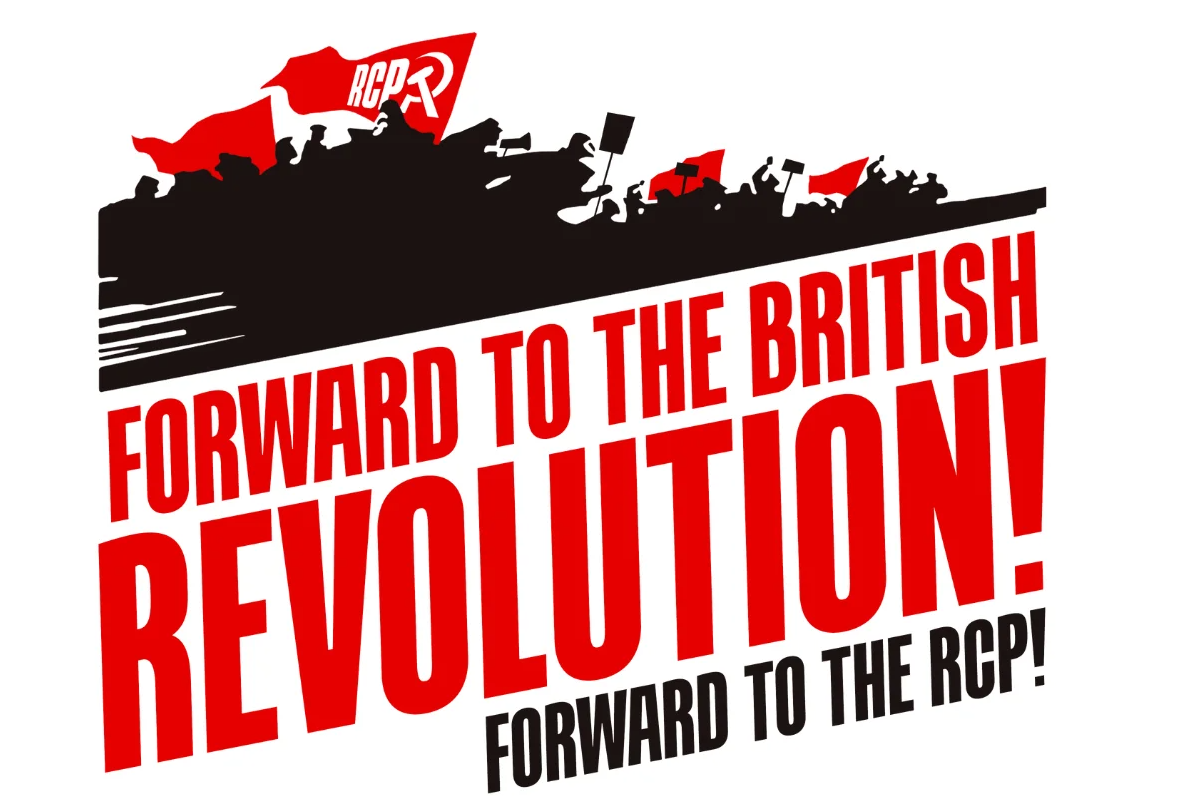
A graphic reading,
Graphic from the RCP publication, "The Communist"

Another way of explaining the RCP’s appeal, according to Will, would be to look at recent history. On the one hand, today’s students have grown up in a world of almost unremitting crisis: the 2008 financial crash, the 2015 Brexit referendum, the ongoing housing crisis and, of course, the COVID pandemic. On the other, Will says, they’ve also seen some breakthrough examples of resistance and rebellion: the Arab Spring of 2011, for example, or more recently Bangladesh’s student-led July Revolution. In other words, it’s about taking inspiration in dark times.

Yet Marxsoc and the Revolutionary Communist Party aren’t going to be running things any time soon. In the 2024 election they achieved their best result in London’s Stratford and Bow constituency, where the party claimed “the presence of revolutionary communists was felt everywhere.” Their candidate, the young and charismatic Fiona Lali, won just 4.1% of the vote—far behind not just the Greens, but also George Galloway’s Workers Party of Britain. Meanwhile, right-wing alternatives like Nigel Farage’s Reform are orders of magnitude more popular than communism, at the ballot-box and on the streets.

Henry insists that the RCP’s failure to cut through with the wider public isn’t down to any flaws in communist theory, but misunderstandings of what communists actually stand for. Authoritarian leaders like Stalin and Mao, who presided over oppressive and murderous regimes during the twentieth-century, aren’t the true representatives of the cause. Instead, Henry and Will are “proud Trotskyites,” referring to the Bolshevik leader forced into exile by Stalin in 1928, then assassinated with an icepick to the head. Their brand of democratic communism, they say, hasn’t yet been given a chance.

Lack of mass appeal right now doesn’t bother Will and Henry. They believe the revolution here in Britain will come suddenly, as if out of nowhere. “It sounds like something you couldn’t expect from the British people… it seems like such a distant future,” Will told me. “As events heat up in this pre-revolutionary phase,” Henry goes on, “more people will look for a radical alternative. It’s our job to prepare it, and one day lead it.”

This Article Appears In

Tower Volume 3 Spring 2026