Students for Reform Can Farage and Friends Build a Youth Movement?

David Skerret

Nigel Farage has been in politics for decades. But for the first time, he is in charge of a party that could actually win the next general election. With Labour support collapsing, the Conservatives still reeling from their worst loss ever, and Reform making sweping local election gains, the future is looking promising for Farage’s latest vehicle.

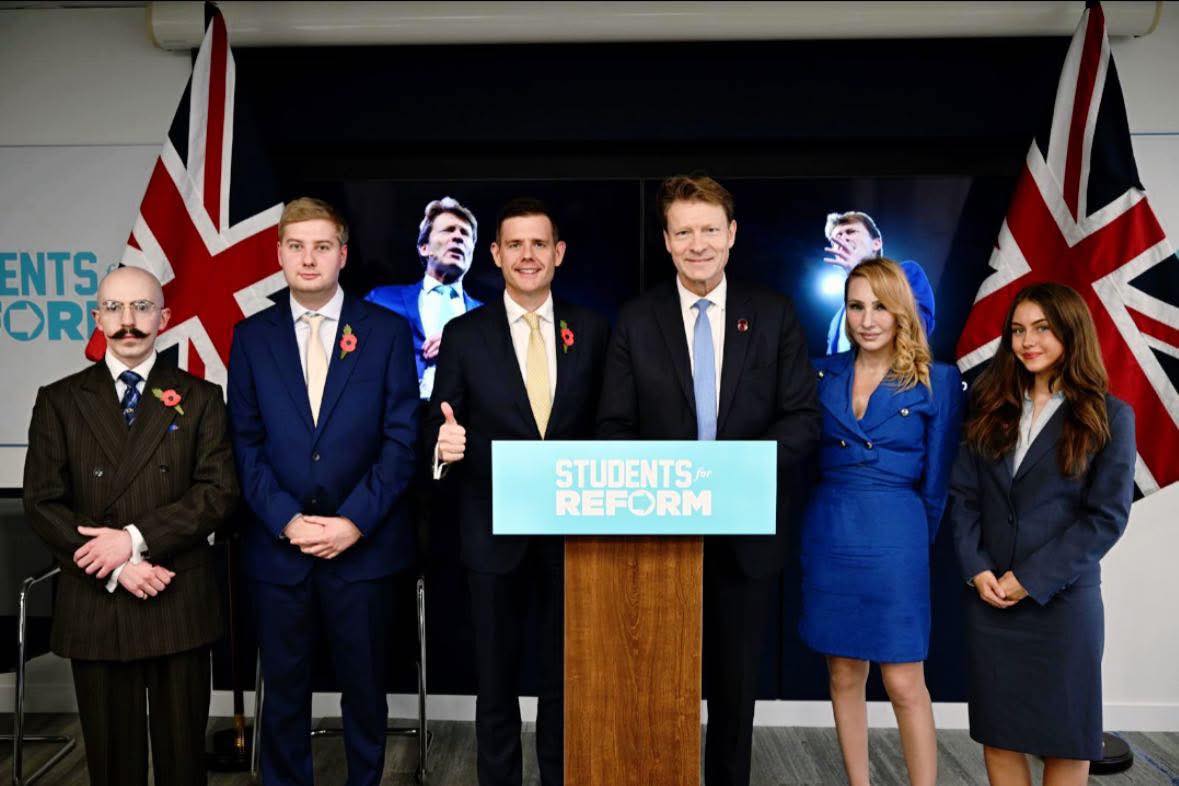
Keeping this momentum going will mean courting voters outside the party’s traditional base. Last November, Farage launched Students for Reform, a student wing led by the controversial political commentator (and defeated byelection candidate) Matthew Goodwin. With multiple university Reform societies popping up across the country, too, the party seems to be pitching for younger, more educated voters. Can they win them over?

Matthew Goodwin (third from left) at the Students for Reform Launch (image from Facebook)

“We have received negativity,” says Henry Bateson, the current president of the Conservative and Reform Society at Newcastle University. “The Reform label is problematic as students are against their stance on immigration, resulting in me and a few others getting a lot of stick.” His assessment suggests the student demographic remains one of Reform’s weakest links. “I’ve been told that York’s Reform society is doing quite well,” Bateson says. “We are still struggling slightly for numbers [in Newcastle], but it seems to be going okay if I was to compare to Durham. I think they are really struggling.”

The merge between the Conservative and Reform societies at Newcastle University happened just last year, and while initially hailed as a success, it hasn’t gone as well as expected. Over a year on from the merger, both societies are still trying to get the decision ratified by the student union, to no avail. This has led to a co-dependency, Bateson says, where if they split, “we lose half our numbers, we cease to exist.” For the time being, Newcastle’s two right-leaning student factions seem to have each other in a death grip.

Students for Reform was meant to give these students hope. Matthew Goodwin, the organisation’s honorary president, has gained a substantial online following by using his academic credentials to launder anti-immigration talking points. Mass migration has “put our own people at risk,” Goodwin has reportedly claimed, and “white British people will be a minority in 40 years.” For some, it is this kind of rhetoric that lies at the heart of Reform’s appeal.

We are still struggling slightly for numbers, but it seems to be going okay if I was to compare to Durham. I think they are really struggling.”
Henry Bateson
Newcastle University Conservative and Reform Society

Jack Eccles, who started the Lancaster University Reform Society and was named the student president of Students for Reform, has even more extreme views on race and immigration than Goodwin himself. Eccles attended the Unite the Kingdom rally last September led by neo-Nazi Tommy Robinson, who has been charged multiple times with stalking and assault. Islamophobia was fundamental to the rally, with the Palestinian flag being torn up on stage, multiple police officers being assaulted, and Katie Hopkins going on a transphobic tirade. Despite this, in a recent interview with student newspaper The Tab, Eccles complained universities were not doing enough about students harassing him.

Leaders of student Reform societies seem glad about Goodwin’s appointment and optimistic about Students for Reform in general. “With a populist vibe, he may attract more young ones to the cause,” Bateson tells me. “Youth is very important, it’s a step in the right direction.” Since the launch back in November, though, the organisation has been conspicuously silent. Neither Farage nor Goodwin himself have bothered mentioning it recently, and the web address students4reform.com leads to an anti-Reform site full of articles about the party’s links to Russia and Jeffrey Epstein.

I reached out to Xavier Hale, the leader of Durham’s University Reform Society, and the current Vice-President and Administrator of Students for Reform. When I asked him about the organization, he said, “I’m currently not allowed to speak about it.”

Hitting a brick wall, I went to Jack Eccles himself, only to be met with a similar response. “Sorry, I won’t talk about Students for Reform,” Eccles told me, “but you can ask me about the [Lancaster University] society.” The only person who would discuss the organisation with me was Henry Bateson, and he has no involvement in its operations.
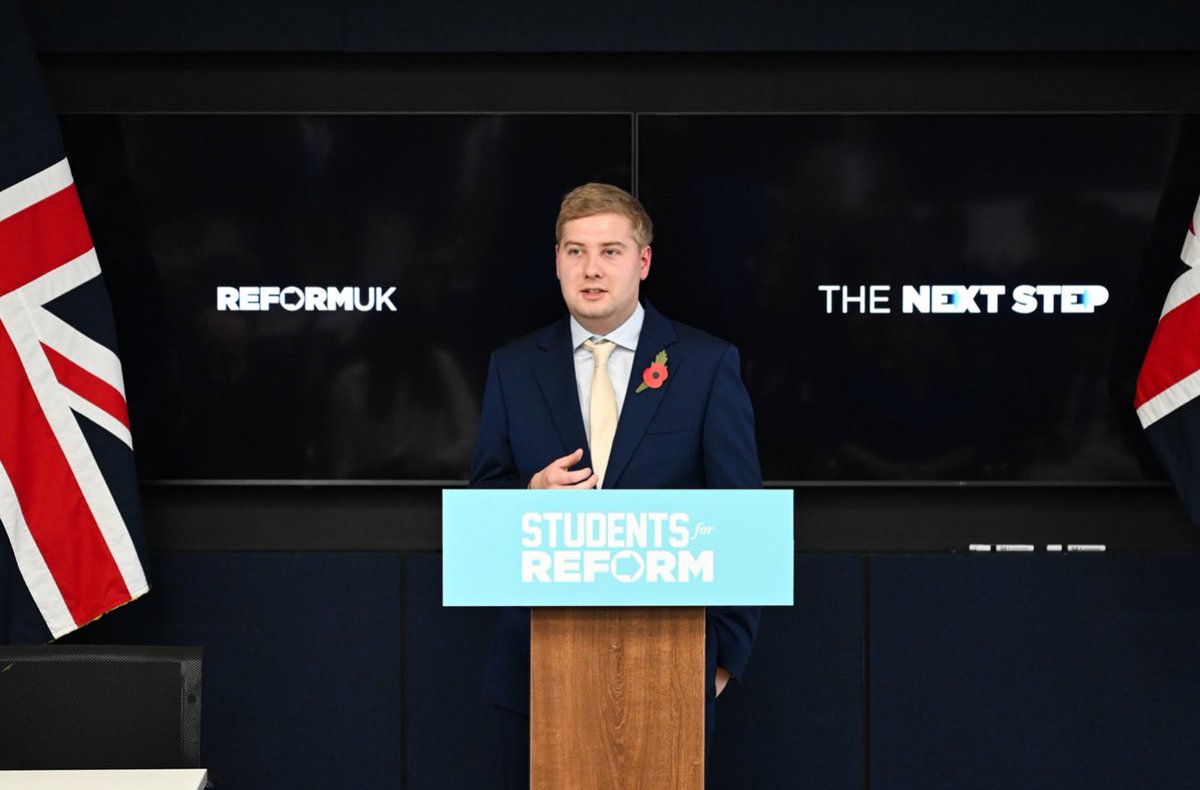
Jack Eccles speaks at a Reform Party event (image from X.com)

It may be that Reform have quickly realised that Students for Reform was a bad idea. At the University of Edinburgh, all main political societies have decided to boycott the Edinburgh Reform society, banning it from any cross-party events. “While the Edinburgh Reform Society says that they ‘don’t care about your race, ethnicity or orientation’, the actions of Farage, Tice and other MPs say otherwise,” said the other societies in a joint statement. It has not even been registered through the student union. Edinburgh’s student politicians say, “We stand united against [Reform].”

This is not the first case of students rebelling against the Reform movement. Remember York’s Reform Society, which Henry Bateson told me is “doing quite well”? Recently, they invited party campaigner Jack Anderton to an event. 400 students turned out to a protest against Anderton, organised by the anti-racist York Student Action Network. Protesters held signs reading, “Hate speech isn’t free speech.” Whether in York or anywhere else, it’s clear that Reform’s student wing will face an uphill battle at the nation’s universities.

Jack Eccles did speak out about the future of Students for Reform back in December, but he didn’t go into much detail. He told The Tab he wants to build community in Students for Reform, and that elections for specific roles will take place when the association is in a more “solidified state.” Since then, the organisation’s radio silence has continued.

Reform is currently still on the rise. But they seem to have an Achilles heel. While student Reform societies have continued to pop up, they are struggling under the surface. With Edinburgh’s society banned from cross-party events, York’s Reform events being protested by the masses, and their leaders complaining about harassment, universities have proved a harsh environment for Reform’s brand of politics. With both the President and Vice-President declining to speak about Students4Reform, and no formal statement since the launch, the group seems all but dead on arrival.

Reform still has a decent shot at winning the next general election, but it won’t be guaranteed without young people’s votes. Their failure to gain an educated demographic, or make headway with the under-35s, shows there is still a chance to avoid putting the British state in the hands of men like Goodwin and Farage.

This Article Appears In

Tower Volume 3 Spring 2026