The Cost of Victory Racing in the Ginetta Junior Championship

Tom Morris-Jones

Twenty-two racecars have just come tearing past me, every driver vying for the same piece of track in the moment—but also the privilege of being on the tracks of the future. As they make their way past us, tyres squealing and engines straining, my friends and I exchange a look, immersed in the smell of rubber and petrol. This is the best part of the weekend.

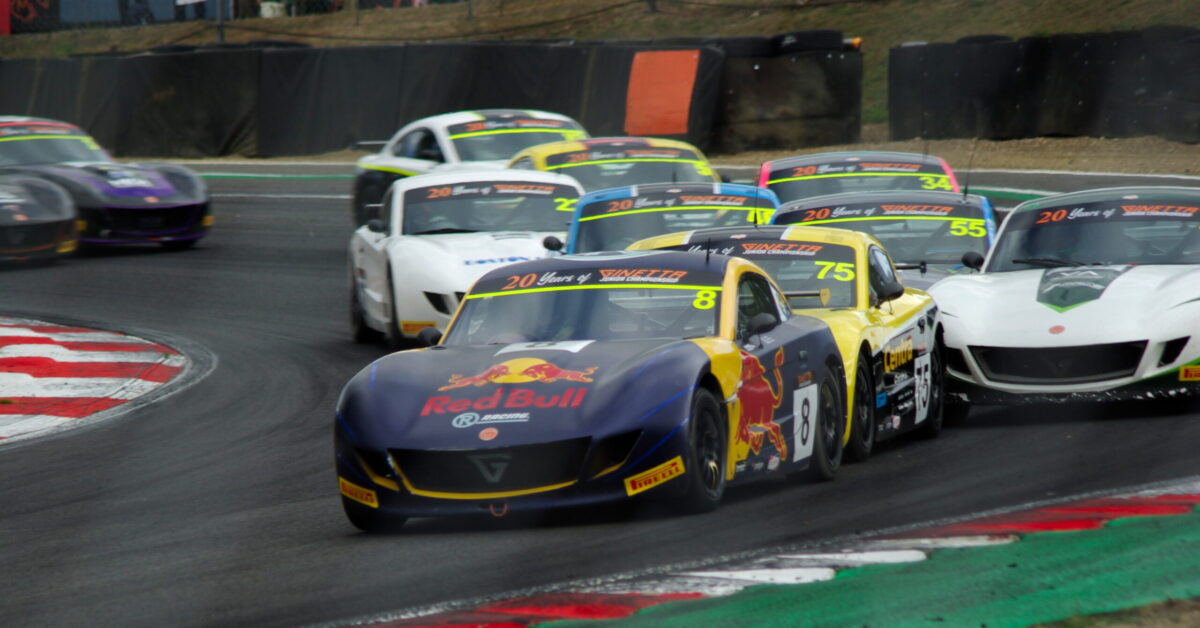
Scott Kin Lindblom is in the middle of the pack as he passes us. He’s trying to keep fifteen others behind him, and doing a pretty good job of it. They are all competing in the Ginetta Junior Championship, one of Britain’s many ‘feeder series.’ These young drivers all want to be the Formula One drivers of tomorrow.

For us, this is a fun, cheap weekend in Kent—we’ve paid £35 each to get in. For Scott, it’s a chance to move one step closer to his dream. It’s also wildly expensive: he says a season has cost him around £130,000.

Scott Kin Lindblom leads the pack at Brands Hatch (photo by the author)

Each car on track is essentially the same. Ginetta, a British sports car manufacturer, started its Junior Championship in 2005, with a view to getting more youngsters into motorsport. Champions of Formula One, the World Endurance Championship and the British Touring Car Championship have started their car racing careers in these machines: Lando Norris, Jamie Chadwick, Tom Ingram and Jake Hill, to name but a few. Nowadays, the cars look slightly different from the Championship’s inception, but the premise remains the same: young drivers, in the same machinery, tearing round Britain’s racetracks.

Scott is one of those young drivers. Only fifteen years of age, he impressed in European karting throughout 2023 and 2024, and was picked up by the Red Bull Junior programme. From there, he was offered a place in the Ginettas, as preparation for Formula Four: single-seater cars that offer an experience building up to Formula One. Scott prefers the Ginettas though. He says they are “really fun due to close racing, slipstreaming, side-tracking, leaning on each other and a lot of overtaking.” He certainly proved that when he was wrestling his car through the Kent sunshine in front of us, wheel to wheel with his fellow racers.

The support from Red Bull, one of the biggest teams in motorsport, is much more than the instantly recognisable livery, the navy blue and yellow which he and eventual championship winner Rocco Coronel sport. It is funding and backing, it is preparation and training for the races that really matter in Scott’s road to the top. Asked whether Ginetta has given him any support as well, Scott’s answer is simple: “Nope, not in any way.”

The man in charge of Ginetta since 2005 has been Lawrence Tomlinson. Like many in the motorsports world, Tomlinson is a businessman first and foremost. His net worth was estimated to be £464 million in 2024, so he can afford to run Ginetta without a complete focus on profit. Like many in the motorsports world, his children also race—although whilst many young racers can say their dad owns their car, not many can say their dad owns the brand.

Tomlinsons Emma, Amy, Lucy and Freddie have all raced in Ginetta machinery over the past seven years. Freddie, the most experienced of the siblings, spent three years in the Junior category, fighting in the middle of the pack for an 18th place finish in the 2019 Championship, and two 9th places in 2020 and 2021. The year afterwards, he was picked to race the vastly more powerful Ginetta G56 GT4 package, a privilege not often offered to those further down in the standings. More recently, he has taken the new, even more powerful Ginetta GT2 out for a spin with his dad, in the GT2 European Series.

Compare this rise with Scott’s nascent career. He spent last summer in the Ginetta Juniors, where he finished fourth, in a highly competitive field. At fifteen, he then flew out to Dubai to compete in the UAE Formula 4 Trophy before talking to me. Before that, he finished third in the Saudi Formula 4 Championship. His pace has done the talking. During his Ginetta Junior campaign, he was working from Thursday to Sunday, from “early mornings to eight in the evening.” It was a lot of work, especially when he was juggling school and his racing career. Scott is still one of the lucky ones though. Not many get the chance to race with Red Bull.

Scott is rising through the motorsport ranks one at a time, through hard work. He got noticed by Red Bull due to his incredible pace early on. Freddie Tomlinson, on the other hand, has had a few middling results over his career, and a father who happens to own Ginetta.

"Those with more money to throw at the season can get more testing days, and from there, more pace."

Despite the promotion of his children’s racing careers, Lawrence Tomlinson still seems to be aware of the immense costs of motorsport. When he bought Ginetta in 2005, reducing the cost of his machines seemed to be one of his top priorities. The G40 Evo, the current model, has been modified to introduce cost-saving measures such as a new, simplified door, a new rear bumper and the removal of headlights.

It may sound dreary, but these are the small things that Ginetta, as a bespoke racing manufacturer, can change to make a difference. After all, you’re never too far away from an accident with racing as close as it is here: many a driver came past us with hastily repaired cars, gaffer tape holding the bodywork together.

Ginetta is uniquely placed to help budding drivers with costs. They now only make racecars, unlike many in the sportscar racing world, who modify road cars to racing regulations. They have pledged to freeze the development of their cars for five years, to avoid competitors purchasing new, expensive machines. So, teams can often sell the cars on once they have raced them: one race-winning example from 2020 was sold for £26,000 for the 2021 season. That said, Scott feels that everything is “mega expensive.” He sees no attempt from Ginetta to keep costs low. So are Ginetta’s efforts really working?

Perhaps from the point of view of the manufacturer, costs are going down, or at least remaining level. For drivers and their families, who are only involved in the Championship for a maximum of three years, costs are still incredibly high. Add in fuel, tyres, registration fees, and insurance, as well as the initial cost of the car, and you’re a fair way towards Scott’s figure of £130,000. Include at least twenty testing days and the £25,000 that Scott estimates for repairs, and that figure can jump to the higher bounds of Scott’s estimate for the costs of a season: £260,000.

Once the drivers have put in all this effort, time and (of course) money, what can they expect to win? First place in the Championship in 2025 brought a £50,000 scholarship towards GB4, a championship run simultaneously with the Ginettas, most similar to, but cheaper than, F4.

For Scott, there was nothing. Despite finishing fourth in his rookie year, there was no prize. Scott is okay with that, though: “At this level it’s only for P1-2-3 and should be like that.” The prize for him was exposure. Teams pay attention to this Championship, and it wasn’t long before Scott had a drive in British F4 for next year, along with the F4 Championships in the Gulf.
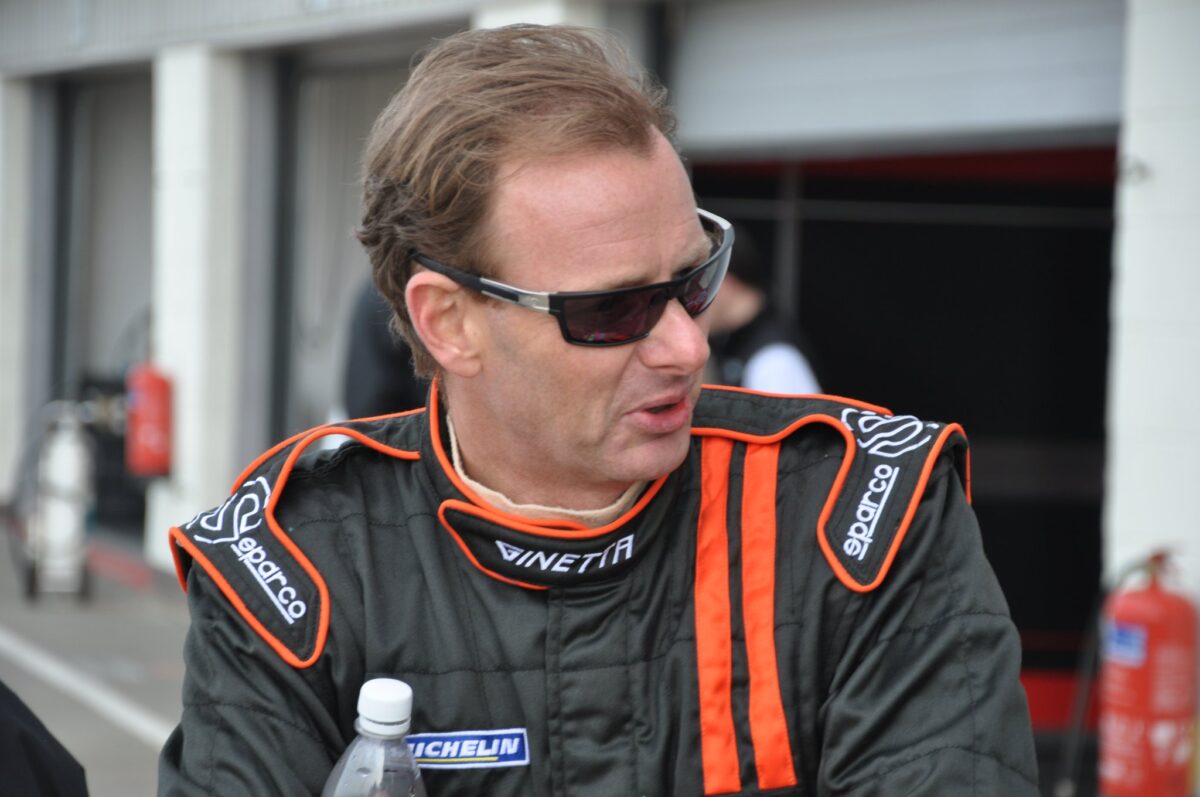
Ginetta boss Lawrence Tomlinson (photo from Facebook)

Devon Hagelen and his dad are looking for a hotel. They’ve driven from their home in the Netherlands, up to Blyton Park, just outside Scunthorpe. The October weather doesn’t make for the glamorous setting that many associate with motorsport, but it is here, at Ginetta’s own track, that the Ginetta Scholarship is being fought out. With just two days of experience in the car, Devon has impressed his examiners enough that they want him to stay for the next round, tomorrow.

It was worth missing school for.

After leaving their hastily found hotel the next morning, Devon got back in the car, made it through to the final four, and was crowned the Ginetta Junior Scholar of 2026. He’d beaten others with over twice his experience.

At thirteen years of age, Devon is the youngest to have won the Scholarship in the fifteen years it’s been running. Last autumn, examiners assessed fifty young drivers on their driving, media skills and fitness. He came out on top, seemingly against the odds. Going into the event, he was aiming to “just have fun.” He’s come out with a fully funded year in the Ginetta Junior Championship. The car, tyres, fuel, insurance and entry fees are all included. Not a bad weekend, all things considered.

The Scholarship is Ginetta’s most bold attempt to allow those without large amounts of money behind them onto the motorsport ladder. Some who take part in the Scholarship participate in the Championship anyway (Scott says that most of the drivers in the final last year went on to the Championship regardless). Devon is different. His only chance to get into the Championship was through this Scholarship—the money simply wasn’t there otherwise. Devon and his dad Jeff agree that more scholarships would be beneficial to the sport, levelling the playing field for everyone. Devon is one of many young drivers who are more than capable of mixing with the best in the sport, but who are constantly driving with the shadow of finance in their wheeltracks.

Even the Scholarship won’t totally even things out. Most teams require between twenty and forty days of testing, most done before the season starts in April. This is where those drivers with more money behind them really benefit. More testing generally equals more pace, as drivers understand the car underneath them. But testing, like everything in motorsport, costs. Those with more money to throw at the season can get more testing days, and from there, more pace. Devon is already at a disadvantage to his wealthier competitors before the season has even started.

What’s next for Devon, if he does well in the Ginettas? Like Scott, he wants to advance into Formula Four afterwards, but is all too aware of the huge jump in costs. For a fourteen-year-old, Devon is remarkably grounded. He is very frank about the nature of the sport, and knows that coming first is only half of the story. He and his dad will still try to advance his career as far as they can, but they are well aware that the money could run out before his pace does.

When Devon is on track next year, along with next year’s Ginetta Juniors, it won’t be the sound of the tyres or the engines that I first notice. When I catch a glimpse of those young racers’ eyes through the visor, I will understand that little bit more about what drives them, and how much support goes in behind the scenes.

The racing is always close and aggressive. Of course it is. It won’t just be first place on track they’re racing for. It will be their dream.

Most of them won’t make it.

This Article Appears In

Tower Volume 3 Spring 2026