How To Make a Stop-Motion Film from Scratch

Victoria McDade

Ten-week deadline. Four days to film. Five days to edit. One stop-motion. This is what it was like to make a stop-motion as an animation student.

A professional, feature-length stop-motion film takes years to make, and hundreds of people. But what if your crew consists of just one person, an emotional support playlist, and lots of caffeine? No problem. With these nine steps, you too can try this time consuming yet captivating art form.

Step 1. Find your theme—from the creepy to the comedic

Stop-motion has been used to tell a wide variety of stories, from the gothic worlds of Tim Burton in films such as Corpse Bride and Nightmare Before Christmas, to Aardman’s chaotic, humorous Claymations like Wallace and Gromit. While students do not have the resources of these major films—nowhere close!—they’re still good points of reference for what can be done in the medium of stop-motion.

A good theme should be something you are interested in, a topic you want to study in detail and are willing to spend days or even weeks animating. Students often choose topics they feel personally connected to. For example, I chose to base my project on Irish mythology as a way to explore my family heritage, something I didn’t know much about but wanted to study more.

Step 2. Research—movie marathons, the best homework ever

Research is the foundation of any animation project. Like academic work, it guides your creative decision-making. But unlike traditional essays with endless reading, you get to watch animated films, analysing their animation techniques, designs, and how they explore similar themes. And yes, binge watching Disney+ and Netflix counts.

In my research on Irish mythology, I watched several films by director Tomm Moore. Moore’s film The Secret of Kells uses a storybook-like digital style, blending elements of Irish history with mythological storytelling. Watching other animations expands your understanding of what can be done and how your theme has been approached before, so you can build on old ideas without simply repeating them.

"I knew I had gone over the edge when I began to listen to Alvin and the Chipmunks on repeat."

Step 3. Create your storyline—don’t let your imagination run too wild

When writing a storyline for a stop-motion, you have to create an engaging story while also considering the production limitations. Think about how many characters and sets you can realistically make in the time available, how long each scene will take to animate, and whether your story has any complex action that will be difficult to bring to life.

You will also have to factor in any production costs, particularly when funding the project yourself. Consider what materials you can find out and about, even in skips: it may not be glamorous but can be surprisingly useful. Or, if you’re like me, you could simply dig into the various materials you were already hoarding “in case they come in handy one day.”

It’s a challenge, balancing the story you imagined with the practical realities of making it—but sometimes that’s where creativity comes from.

Step 4. Character and set design—keep doodling and developing your ideas

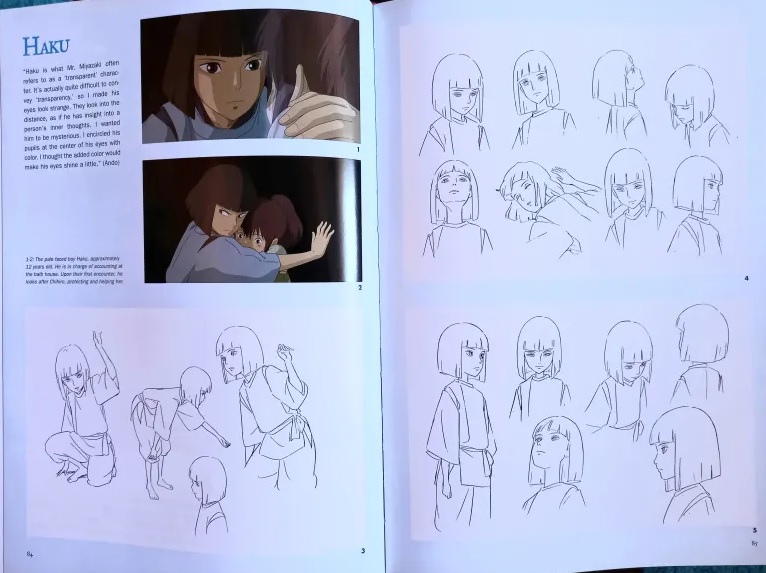
After establishing your storyline, the next step is character and set design. Consider the work of Japanese animator Hiyao Miyazaki. His characters’ personalities are right there in the way they look. Animators have to exaggerate everything when it comes to their characters, so that the design conveys a personality.

This is something you develop over time. Your first designs probably won’t be your final ones. Even Miyazaki didn’t always get it right first time. Whether you’re an award-winning animation studio or a complete beginner, character design is a learning process.

Pages from The Art of Miyazaki's Spirited Away (Studio Ghibli Library, 2008)

Step 5. Storyboarding—the blueprint of animation

Once your characters and storyline are established, the next step is storyboarding. A storyboard is a visual plan of your animation. When pieced together, it can be turned into an animatic, a roughly timed version of your animation that helps establish pacing and camera angles.

A 2023-2024 exhibition at the Cartoon Museum displayed the animatic of a scene from Wallace and Gromit: The Wrong Trousers alongside the final scene from the film. Seeing them side by side really shows the importance of storyboarding as a pre-production step. Animating without it would be like trying to build a house without a blueprint.

A storyboard is used to map out scenes, but it is not a final product. It doesn’t have to be perfectly drawn. When deadlines are looming, there is no time for elaborate artistry. One advantage of having a crew of one was that no-one else had to understand my chicken scratch storyboards.

Step 6. Making characters and sets—your designs coming to life

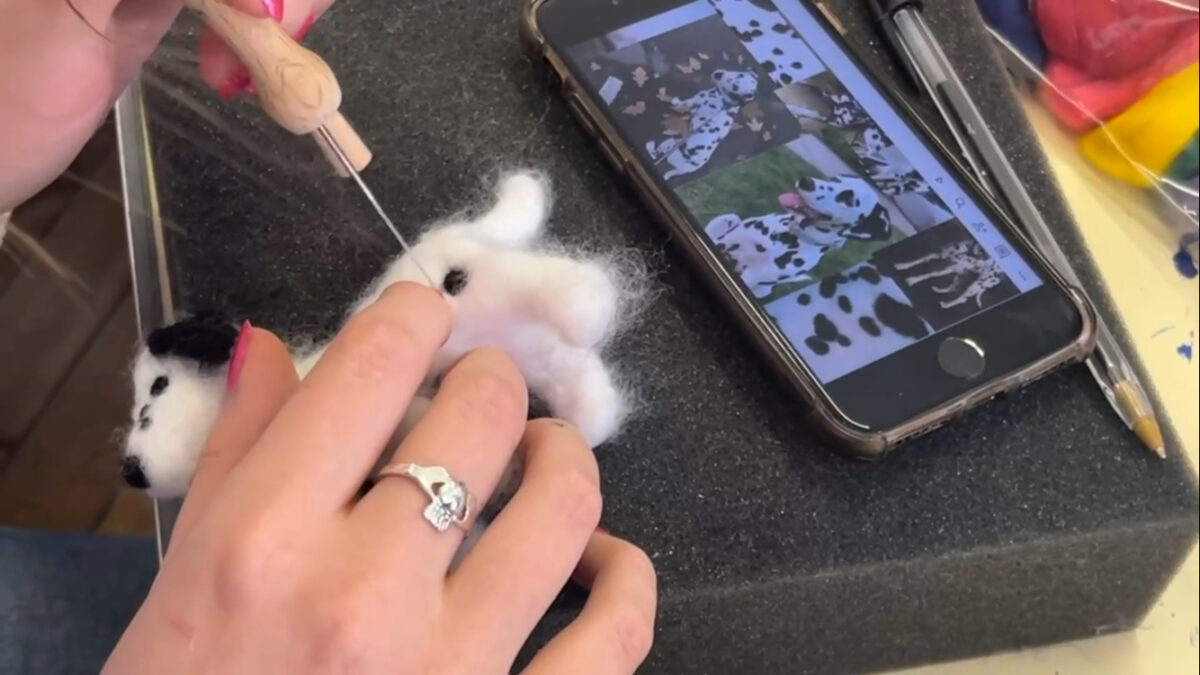
“People really respond to the craft in stop-motion,” says Andrew Bloxham, a team-leader on Aardman’s Chicken Run: Dawn of the Nugget. Stop-motion is truly a blend of a wide variety of crafting techniques: sculpting, sewing, painting, crocheting, and sometimes things as absurdly specific as curling hair made of embroidery thread.

Suddenly, any random hobbies you’ve accumulated over the years become useful. The hot-pink sewing machine from Christmas ten years ago is now used for making tiny clothes, and the polymer clay kit from a birthday long-ago is just the thing you need to sculpt your characters’ heads.

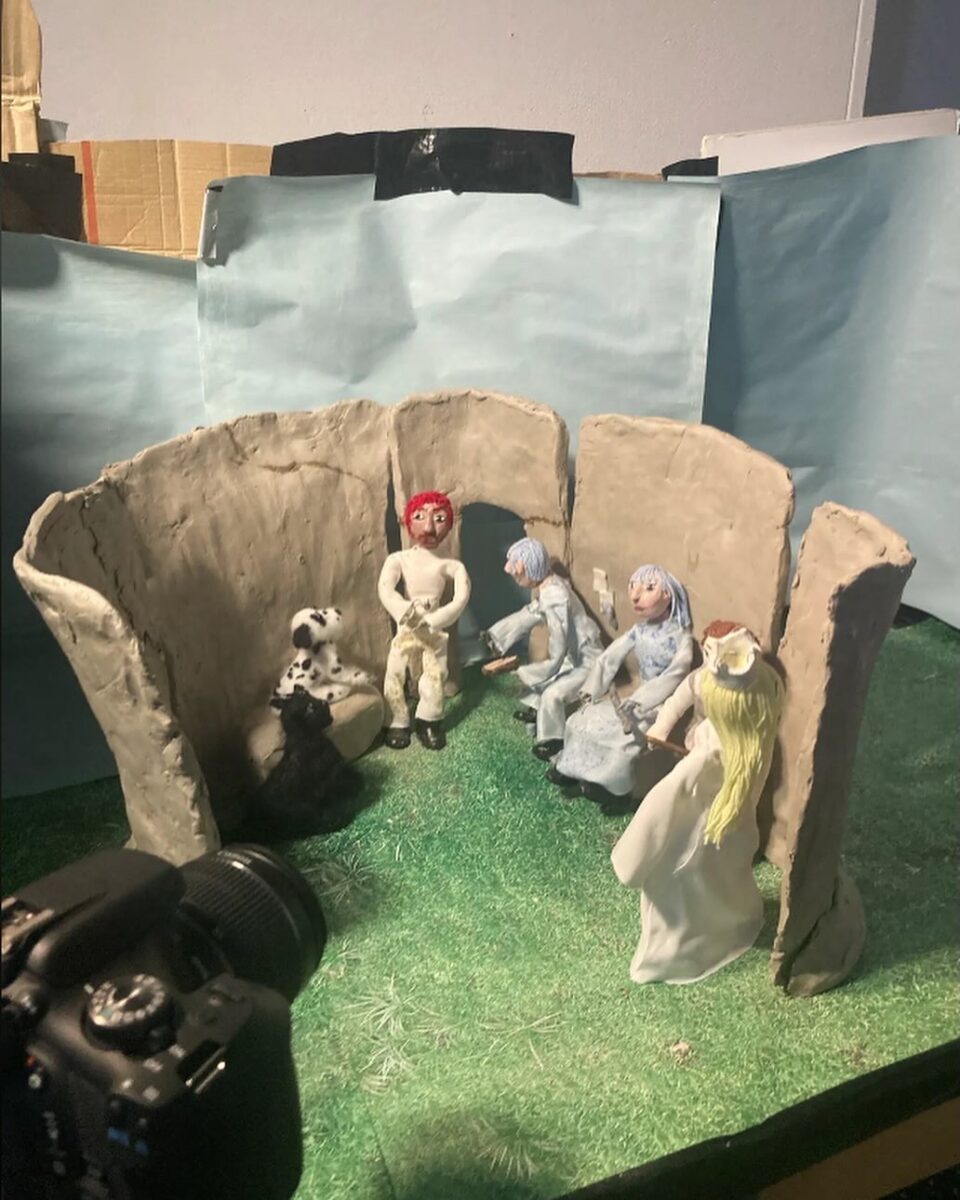
For me, making the set was a bit more challenging than making the characters, largely because I decided to build it entirely out of air-dry clay. This meant commuting to university with a large block of clay, alongside all my other craft supplies.

Carrying that much clay on the Tube felt rather odd, but it reminded me of the other things I had carried on public transport as an art student. I’m sure commuters travelling from their important Central London jobs were puzzled the day I travelled home with a cat made entirely of paper and masking tape sat on my lap. As an art student you have to embrace the absurdity of your craft.

7. Filming and Animating—how hours of work can turn into seconds

To film a stop-motion you need a space large enough for your set, lights, a camera, and a computer that has a stop-motion program like Dragonframe. You also need a completely blacked-out room so that the lighting stays consistent during filming.

Our stop-motion room was far from professional. It was just another studio in the Foundation building, the only difference being the blinds that were duct-taped to black out the room. Some mornings I arrived to find the tape peeling off and having to reattach everything before animating a single frame. You don’t necessarily need a fancy room to make a stop-motion, just some equipment and maybe a roll of duct tape.

Only having four days to film meant every moment in the studio mattered, especially when a scene lasting only a few seconds could take hours to animate. One second of animation in LAIKA Studios’ Coraline is 24 frames, but each of those frames took five minutes to set up.

Yep, that’s two hours of work for every second that appears on screen.

Spending hours at a time in a dark room with just two other equally immersed students, all of us moving figures millimetres at a time, does weird things to the brain. The repetitiveness of stop-motion makes music an essential lifeline for a student, which is how I listened to almost every playlist on my Spotify. I knew I had gone over the edge when I began to listen to Alvin and the Chipmunks on repeat.

The filming process was not without its catastrophes. On day two, one of my clay walls fell from my set and shattered on the floor. The studio went silent. The two girls in the room, my companions in this descent into madness, looked over with a look of shared panic. But it is important to accept whatever happens and keep animating, because the timeline is short.

Aardman director Sam Fell described the animating process of Chicken Run: Dawn of the Nugget as “like capturing lightning in a bottle, but just incredibly slowly.” While sometimes a painstakingly slow process, there’s nothing like seeing a collection of inanimate materials come to life on screen.
8. Editing, sound and foley—creating sound from silence

Editing can begin during filming. As you collect your footage, you begin to assemble the scenes, thinking about sound recording and music. The process of creating sound in your film is called foley. Foley includes every sound in a scene, including background noise, because no scene is truly silent.

Using friends and family as voice actors is great for a student who may not have the budget to hire professionals. My dad became the voice of a guide to the mythical land of the Sidhe people, and after a quick message to my cousin in Belfast I had the voice of my protagonist, Gráinne.

Music is a key aspect in animation, either as a tool for shaping the emotion of a scene, or as a plot point. In the stop-motion short film The Song of a Lost Boy, music is central to the story. The film explores the protagonist’s journey of self-acceptance after losing his heavenly treble voice through his discovery of different forms of music-making.

A key aspect of my animation was Gráinne’s flute playing and the music of the Sidhe people. So, with absolutely no backup plan, I emailed a musician I found on YouTube for permission to use his work and, to my very grateful surprise, he said yes. Sometimes you have to take some chances for the sake of your animation.

Most of the music fit my scenes perfectly, but one moment required a more specific style of recording. This is how, again, long forgotten hobbies can prove useful. I dug out my old flute, now slightly rusty from disuse, and recorded the melody myself.

With the voices recorded, sound effects added and all scenes edited together, finally the stop-motion is finished and ready for submission.

9. Displaying the set—a new skill to add to your CV

Submitting your animation is not the end of the process. As a student, the display of your work is also a part of the examination process. This is how I found myself, roller in hand, painting the walls of the studio. Despite never having painted a wall before, we were trusted to get the room ready for the Foundation show, transforming our role from animator to decorator.

We even had to make our own plinths to display our sets. I can now say I not only know how to make a stop-motion, but also a plinth, from scratch.

This Article Appears In

Tower Volume 3 Spring 2026